
{主关键词}
奋斗
홈플러스, '홈플 is Back' 3차 특가…한우·한돈 최대 50% 할인_我的网站

A |
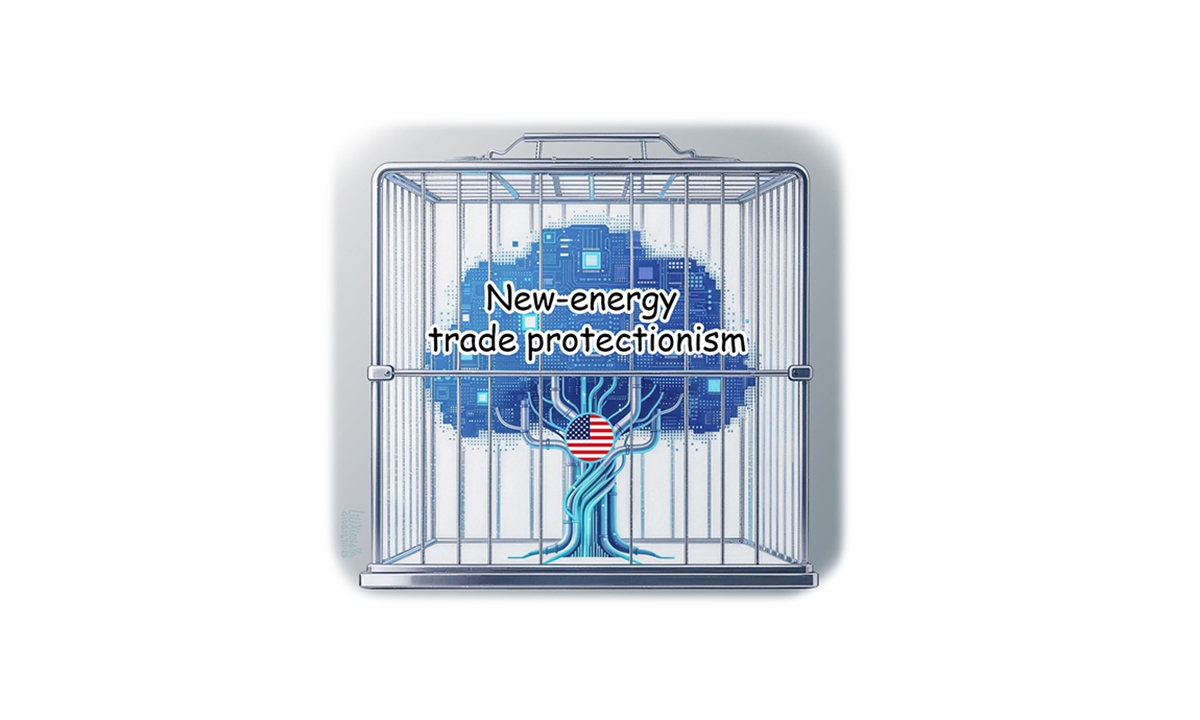
Recent media reports have questioned whether a natural gas plant built to power an Amazon data center project in Texas could become the largest climate polluter in the US. The controversy, whatever the eventual outcome, offers a reality check for America's artificial intelligence (AI) drive.
It exposes a growing contradiction: The US is racing to expand its AI capabilities, yet its protectionist trade policies are making it harder and more costly to access some of the clean-energy technologies needed to sustain that expansion. This raises a broader question: Can an energy-intensive AI race afford the costs of renewable energy protectionism?
The US is entering a new era of rising electricity demand. Data centers, the backbone of the AI economy, are emerging as one of the fastest-growing sources of power consumption. Much of that demand is still being met by fossil fuels: The International Energy Agency reports that natural gas supplies more than 40 percent of the electricity used by data centers in the US, making it their largest source of power.
So, it's not surprising that the expansion of data centers has raised concerns over their environmental impact and the pressure they could place on local power systems and electricity bills. A Gallup survey conducted in March found that seven in 10 Americans opposed the construction of AI data centers in their local area, including 48 percent who strongly opposed such projects.
The findings point to a broader challenge for the US: The race to develop AI is increasingly becoming a race to meet growing energy needs. Addressing this challenge will require more than advances in computing technology; it will also depend on an energy system capable of delivering large amounts of reliable, affordable and cleaner power. That, in turn, will require faster development and broader deployment of clean-energy technologies, from solar power to energy storage.
Yet in the clean-energy sector, the US has increasingly relied on protectionist trade measures that limit access to cost-competitive products from global markets. The country has placed greater emphasis on expanding domestic manufacturing capacity, but rebuilding entire clean-energy supply chains at home is a costly and time-consuming process. Even if expanded domestic production is achieved, it is likely to come at a higher cost, making the deployment of renewable technologies more expensive and potentially slower.
The solar industry offers a clear illustration of this policy direction. The US has continued to expand trade barriers in the sector. Reuters reported that the US government announced on Thursday a series of price floors and a 15 percent tariff on products made from polysilicon, a raw material used in solar panels.
The challenge lies in the limited scale of the US polysilicon industry. Reuters reported that the country has two polysilicon factories. Against this backdrop, relying on domestic polysilicon production while restricting access to imports runs counter to the goal of expanding solar power in the US. The country risks creating barriers that ultimately constrain its own access to the global supply chains needed for growth.
The pressing issue for the US is the speed at which new power demand is emerging. The expansion of data centers is creating electricity needs that cannot wait for domestic clean-energy capacity to develop gradually. Global supply chains can provide the scale and speed required in the near term. By narrowing access to these sources, the US risks turning clean-energy policy into a drag on the infrastructure needed for its AI race.
The US has placed AI high on its economic and technological agenda. The outcome of this race will matter greatly, as financial markets are also watching whether America can turn its AI efforts into commercial success.
This leaves the US with a difficult choice: Can it afford the cost of clean-energy protectionism while racing to build AI infrastructure? The answer may be no. Trade barriers that limit access to competitive renewable technologies could ultimately become a constraint on the AI expansion that Washington is seeking to accelerate.
The author is a reporter with the Global Times. [email protected]
。

B | 홈플러스가 재개장 이후 세 번째 특가행사를 열고 한우와 한돈, 계란 등 주요 신선식품을 할인 판매한다. 13일 정식 개장을 앞둔 홈플러스 강서점 입구에 10시 오픈을 기다리는 고객들이 줄을 서 있다.홈플러스는 오는 27일부터 '홈플 is Back' 세 번째 특가행사를 진행한다고 26일 밝혔다. 지난 2주간 행사에서 고객 반응이 좋았던 상품을 중심으로 할인 품목을 구성했다.마이홈플러스 멤버십 회원을 대상으로 한우 전 품목은 27일부터 30일까지, 한돈 일품포크 전 품목은 28일부터 30일까지 최대 50% 할인 판매한다. 냉수마찰 기절꽃게는 100g당 990원에 선보인다.계란 가격 부담을 낮추기 위해 미국산 백색 신선란 30구는 3990원에 판매한다. 1인당 하루 2판까지 구매할 수 있으며 서귀포점은 제외된다.보먹돼 꽁꽁 냉동 삼겹살은 100g당 990원에, 전복과 부산 간고등어는 각각 50% 할인된 가격에 판매한다. 복숭아 전 품목과 영암 무화과도 5000원 할인한다.4대 카드로 결제하면 햇사과와 국산 포도 전 품목을 5000원 할인하고, 국내산 감자 2kg과 깐마늘 500g은 각각 4990원에 판매한다. 된장·고추장·식용유·참치액·쯔유 등 양념류와 제과, 피자, 유부초밥, 요거트, 치즈, 음료, 화장지 등은 브랜드별 1+1 혜택을 제공한다.8월 27일부터 30일까지 마이홈플러스 앱 회원이 4대 카드로 6만원 이상 결제하면 4000원 쿠폰 할인도 받을 수 있다.이번 행사는 홈플러스 재개장 이후 세 번째로 진행되는 대규모 할인 행사다. 홈플러스는 회생절차 진행 상황에서 고객 방문과 매출 회복이 중요한 만큼, 재개장 이후 연속적인 할인 행사를 통해 고객 유입과 구매 확대를 이어가고 있다.홈플러스 관계자는 “홈플러스가 회생에 성공하기 위해서는 고객분들이 계속 매장을 찾아주시고 더 많은 상품을 구입해주시는 것이 무엇보다 중요하다”며 “기대를 가지고 홈플러스 매장을 찾아주신 고객분들이 만족하실 수 있도록 다양한 상품과 큰 폭의 할인행사를 준비했다”고 말했다.。

C |
Current article:http://s8q2ytw.wenwancaomohenenqiongpangshun.bond/kxgvq/gqxqec.html
Published on:00:00:00
- 265隆尧县人民检察院:公开听证显公正 温情司法护民生
- 8535传闻小卡或将遭处罚 部分有意球队因此望而却步
- 6852569China imposes anti-dumping tariffs of up to 54.3 % on US, Mexican pecans in form of deposits: MOFCOM
- 324685抓了一条发现第二条 准备离开时又发现第三条 气温一高杭州多地上演“蛇出没”
- 286拼多多赵佳臻:推动平台生态治理常态化、精细化和制度化
- 258Taliban bans many subjects for women in Afghan varsities
- 8705786导航站还能做吗?网址导航站的流量与变现
- 6321004大钟寺墙外添无界公园
- 864AI修图成酒店宣传主流方式?律师分析
- 9971省市多部门办理人大代表建议 协同推进吴石红色文化资源开发
- 5775356比240Hz快4倍!LG首款1000Hz显示器上市:999美元
- 993094卫星记录“穷院坝”华溪村变形记
- 3781150厦门启动毕业生云端招聘 将持续至明年年初
- 7248218Cloudflare 称 AI 智能体已占 60% 互联网流量,同比激增 1700%
- 2682824Foreign financial institutions bullish on China's hard-tech growth momentum
- 189345【透视社·反腐快报】贪了29年!中国人民银行原党委委员、副行长范一飞敛财超3.86亿
- 530915美国14岁少年挑战全球最辣玉米片被辣死
- 212[지금 중동은] “아이들아, 연 날리지 마…폭격 맞을 수 있어”
- 3353375为缓和紧张局势,叙过渡政府外长会见以色列摩萨德局长
- 1592377【年度盘点】__个关键事件,回眸杭州市滨江区钱塘山水幼儿园的2024
- 3409097国家统计局:8月中旬生猪(外三元)价格环比上涨5.8%,国家统计局:8月中旬生猪(外三元)价格环比上涨5.8%
- 7054东亚杯,中国足球一胜一负
我的网站热门国内
- Copyright @ 2016-2017 我的网站 版权所有