
魔法禁书目录
反跨境腐败法草案首次提请全国人大常委会会议审议_我的网站

A |
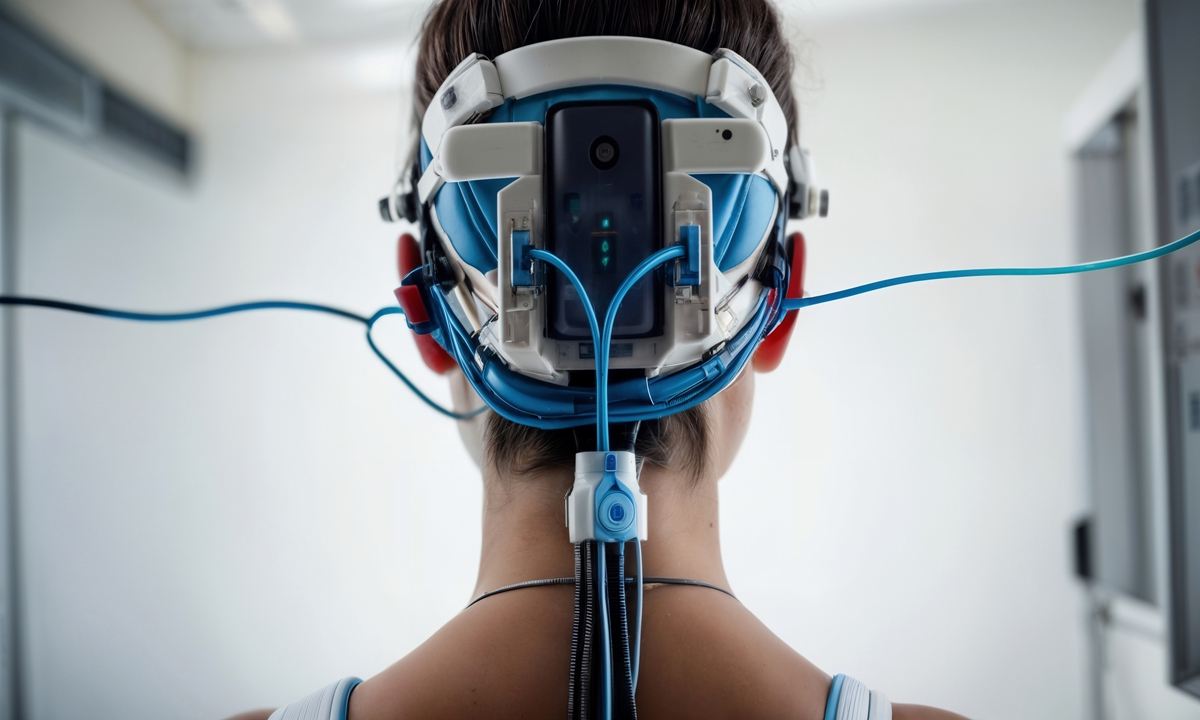
Chinese researchers have developed a multifunctional electrode coating that addresses key challenges in long-term brain-computer interface (BCI) implantation, including signal loss and tissue adhesion, bringing BCI one step closer to clinical application, the Global Times learned from the research team behind the findings on Sunday.
As an emerging field combining neuroscience and artificial intelligence (AI), BCI faces a major challenge of ensuring long-term compatibility between electrodes and brain tissue. Previous clinical trials showed that immune responses could cause implanted electrodes to retract after just three months, severely reducing signal quality and the number of available channels.
This problem stems from chronic inflammation triggered by implants, which creates insulating scar tissue around electrodes and separates them from neurons. Irreversible adhesion between electrodes and brain tissue after long-term implantation also makes device removal risky, potentially causing brain injury during follow-up surgeries.
Experiments showed that flexible neural electrodes coated with this material could operate stably in the brain for more than 300 days and could be safely removed without causing damage. This means the universal coating technology can make electrodes not only operate stably over the long term but can also be safely removed and replaced after aging, paving the way for long-term BCI applications.
Developed by the research team led by Zhang Wei at the Technical Institute of Physics and Chemistry, Chinese Academy of Sciences, associated with Beijing Tiantan Hospital, Shanghai Institute of Microsystem and Information Technology and NeuroXess, a high-tech life science company specializing in BCI technologies, the cationic alternating peptide electrode coating preserves electrode flexibility and conductivity, while offering antibacterial, anti-protein adsorption and immune-rejection-inhibiting functions.
A 300-day animal study showed the coating's effectiveness. Bare electrodes experienced a sharp loss of recording capability after 90 days of implantation and could barely detect neuronal signals after 300 days. In contrast, coated electrodes maintained stable recording channels and consistently captured neural signals above 155 microvolts.
In terms of neural modulation, after 300 days of implantation, conventional electrodes required a current of 100 microamps to induce weak limb responses, while coated electrodes triggered clear movements with only 2 microamps, improving modulation efficiency by 50 times.
Notably, the removal tests highlighted a key advantage of the coating that electrodes no longer form irreversible bonds with brain tissue. In the experiments, the coated electrodes were removed intact, with minimal damage to the surrounding brain tissue, Zhang told the Global Times on Sunday.
。 原标题:人大常委会|反跨境腐败法草案首次提请全国人大常委会会议审议 新华社北京8月25日电(记者孙少龙、胡了然)反跨境腐败法草案25日提请十四届全国人大常委会第二十四次会议首次审议。

B | 草案共六章四十七条,主要内容包括明确我国反跨境腐败工作的原则、范围和主张;明确反跨境腐败工作机制和职责;强化案件办理和国际合作;明确企业廉洁合规义务;明确法律责任。 党的十八大以来,以习近平同志为核心的党中央高度重视反腐败国家立法,对加快完善反腐败涉外法律法规作出一系列重要部署。落实党中央重大决策部署,总结实践经验,有必要制定反跨境腐败法,为维护我国国家主权、安全和发展利益提供有力制度保障。 据介绍,制定反跨境腐败法是贯彻落实党中央关于跨境腐败治理决策部署,加快形成系统完备的反腐败涉外法律体系的重要举措;是强化我国反腐败鲜明立场,维护我国国家安全和发展利益的迫切需要;是规范跨境经营企业健康发展,营造市场化法治化国际化一流营商环境的务实举措;是丰富追逃追赃和办理涉外腐败案件法律“工具箱”,提高反跨境腐败工作能力的创新举措。 制定反跨境腐败法,将党的十八大以来我国推进反跨境腐败的经验做法与实践成果上升为国家法律,有利于丰富反跨境腐败法律措施手段,解决跨境腐败发现难、取证难、追赃难、定罪难等突出问题,为查办跨境腐败案件提供有力法律保障。(完) 【编辑:王琴】。
Current article:http://s8q2ytw.wenwancaomohenenqiongpangshun.bond/list_dw2/a6d0vw.html
Published on:00:00:00


1
司令出访期间被解职,专机受禁无法降落,手下将士一怒围攻总统府,半个史观,原创 司令出访期间被解职,专机受禁无法降落,手下将士一怒围攻总统府2
《传奇新百区-盟重神兵》新服霸业8月26日14点火爆开服3
俄媒:俄外长获发参加联合国大会签证 此前美方迟迟不给4
优酷否认被今天的头条新闻所收买:一无所有5
开学遇元宵 绿伢启新程6
6-4!亚洲黑马首进欧冠正赛:连扳4球大逆转 补时绝平+加时赛制胜7
昨天CBOT豆油市场探底回升,技术抛压有所缓解8
Economy Minister Sergio Massa leads populist Javier Milei9
未收到货,要求退款10
India-Canada: भारत-कनाडा रिश्तों में सुधार, नई दिल्ली और ओटावा में नए उच्चायुक्त नियुक्त11
曝勇士用训练营合同招揽本西 或奔赴湾区试训12
沪指4000点遇“高原反应”,是回头还是蓄力?13
停火不到一天,阿塞拜疆和亚美尼亚在边境地区再起冲突14
IAEA team gathers samples near Fukushima as treated radioactive water is released15
马斯克重磅警告:2024或是美国公民决定国家命运的最后机会!
- 随机推荐
1
Unitree IPO winning rate at approximately 0.018%, signaling heated investor demand2
दिल्ली पंचायत राज लागू करने की मांग को लेकर याचिका दायर, अदालत ने सरकार के वकील से पूछा अहम सवाल?3
A股三大指数集体收涨 证券与工业金属板块领涨4
天文学专业走热带来的启示5
吉南辽北蒙东六市深化合作高质量协同发展第三届会议六市特色产品及产业链供应链展启幕6
范子铭新赛季确定留队 预计在队里的角色会升级7
AI“追新”风气悄悄结束 Anthropic顶尖模型在企业市场遇冷8
订单排到2027年!中国“降温节水”神器在欧洲热卖9
【透视社·履新动态】赵建玲任三门峡市委副书记10
秦皇岛经开区发展能级持续跃升11
苹果 Mac mini M6 政府补贴 + 教育优惠 5269 元起,较 M4 老款上浮小千元12
文化和旅游部公布国家级非物质文化遗产代表性项目保护单位调整名单13
非遗精英荟暨第五届济南非遗创意设计大赛专家宣讲会首期开讲14
投诉酷狗音乐15
【东兴一幼 | 第796期 | 园所活动】携手相辅助 扬帆共成长——合肥市东兴第一幼儿园开展园际交流活动